Ben Devlin Pipit Restaurant
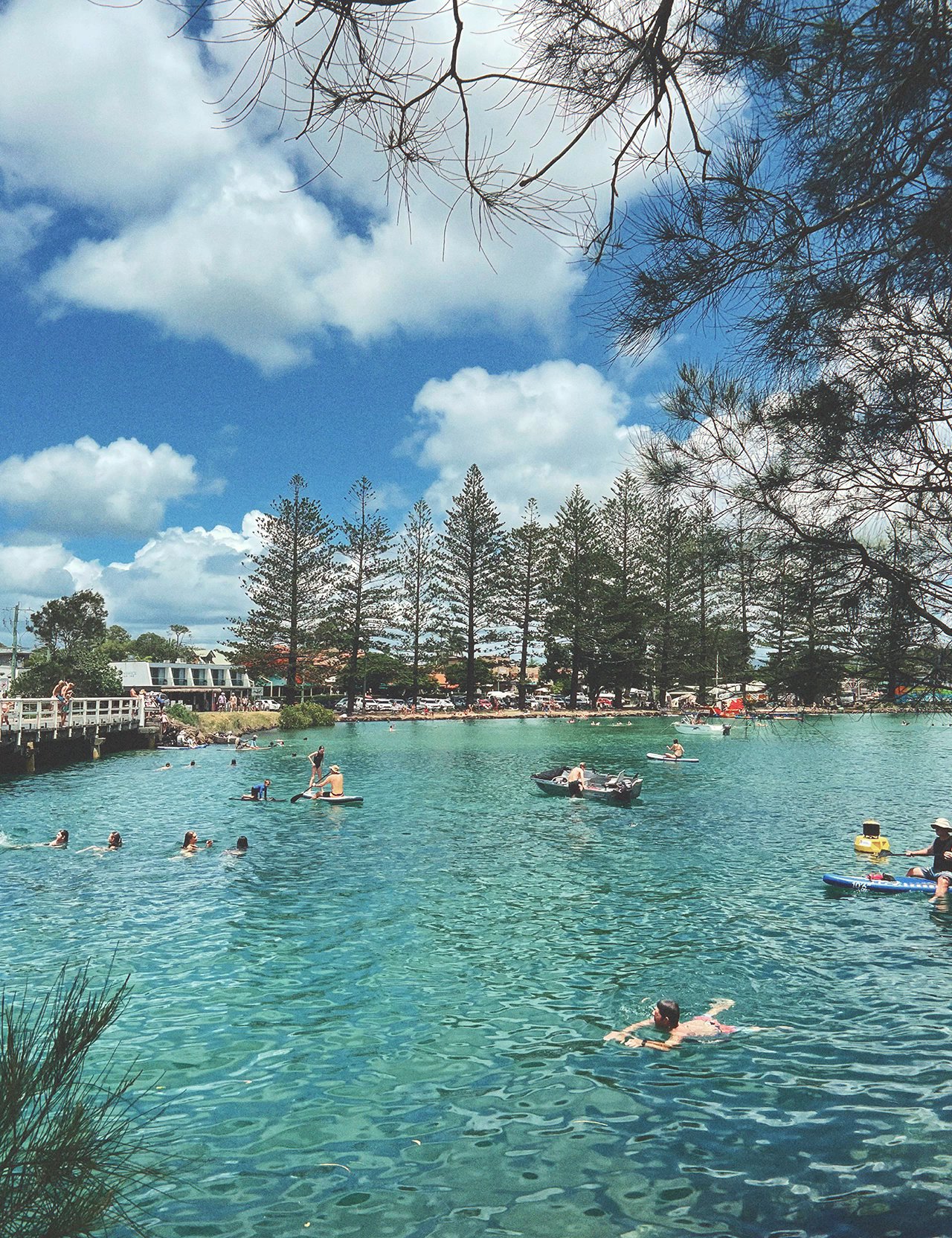
Pipit is a small fine-dining restaurant located in the seaside village of Pottsville. Set around a uniquely open-plan kitchen, the menu showcases wood-fired cooking, sustainable seafood, and seasonal Northern Rivers produce.
Owner and chef, Ben Devlin, grew up in nearby Byron Bay, and he and his family have called the Northern Rivers home for the past eleven years. His deep connection to the region, a passion for collaborating with local producers, suppliers, and creatives, and a dream to own his own restaurant, inspired Ben to open Pipit in 2019.
The turning point in Ben’s career came at Noma in Copenhagen, where he worked from 2009 to 2011 as the restaurant claimed the number one spot on the World’s 50 Best Restaurants list. Working at Noma taught Ben to look at suppliers, products and their by-products differently — asking “How do you use the whole thing?” — and to find or create luxury in everyday ingredients. Whether it’s a whole fish or a whole tomato, the principle is the same. His time at one of the world’s most influential restaurants instilled a mindset to treat all ingredients (and resources) as precious and valuable, and helped shape the produce ethos that underpins Pipit.
We speak with Ben about his connection to the Northern Rivers, how place shapes his cooking, and what it means to honour the region’s produce and producers through his work.
(Food and interiors photography by Sabine Bannard; Portrait by Selena Evison; Gyotaku photography by Rhiannon Taylor)
Mosey Guide (mg): What is your connection to the Northern Rivers?
Ben Devlin (bd): I grew up in Byron Bay and have always felt connected to the region — even when I had moved away for study and work (to Brisbane and overseas), I frequently came back to visit my dad and family here. I moved back to the Northern Rivers full time about 11 years ago, with a job opportunity to launch Halcyon House in Cabarita in 2015. In 2019, we opened Pipit in Pottsville, as my career goal was always to own my own place.
(mg) What do the Northern Rivers mean to you?
(bd) It’s home. It’s life. It’s where our kid and business are growing up
Family connections and great local produce was one reason that coming home and opening Pipit Restaurant was a “no brainer”. The other main benefit of the Northern Rivers area is also the people that it attracts — which are people that value the community connection, support creativity, and see a way to make their passion and work a benefit to the area. This network includes great farmers, fishermen, drink-makers and many local designers and trades too. The idea of food systems being rooted in the local community is wide reaching and can involve many creative aspects. As an example, we have formed ongoing collaborations with local ceramicist (Grit Ceramics, Pottsville) where we recycle grill ash, pipi shells and fish bones from our kitchen into glazes and bone china.
The other main benefit of the Northern Rivers area is also the people that it attracts — which are people that value the community connection, support creativity, and see a way to make their passion and work a benefit to the area.
(mg) How does being in the Northern Rivers shape what you do?
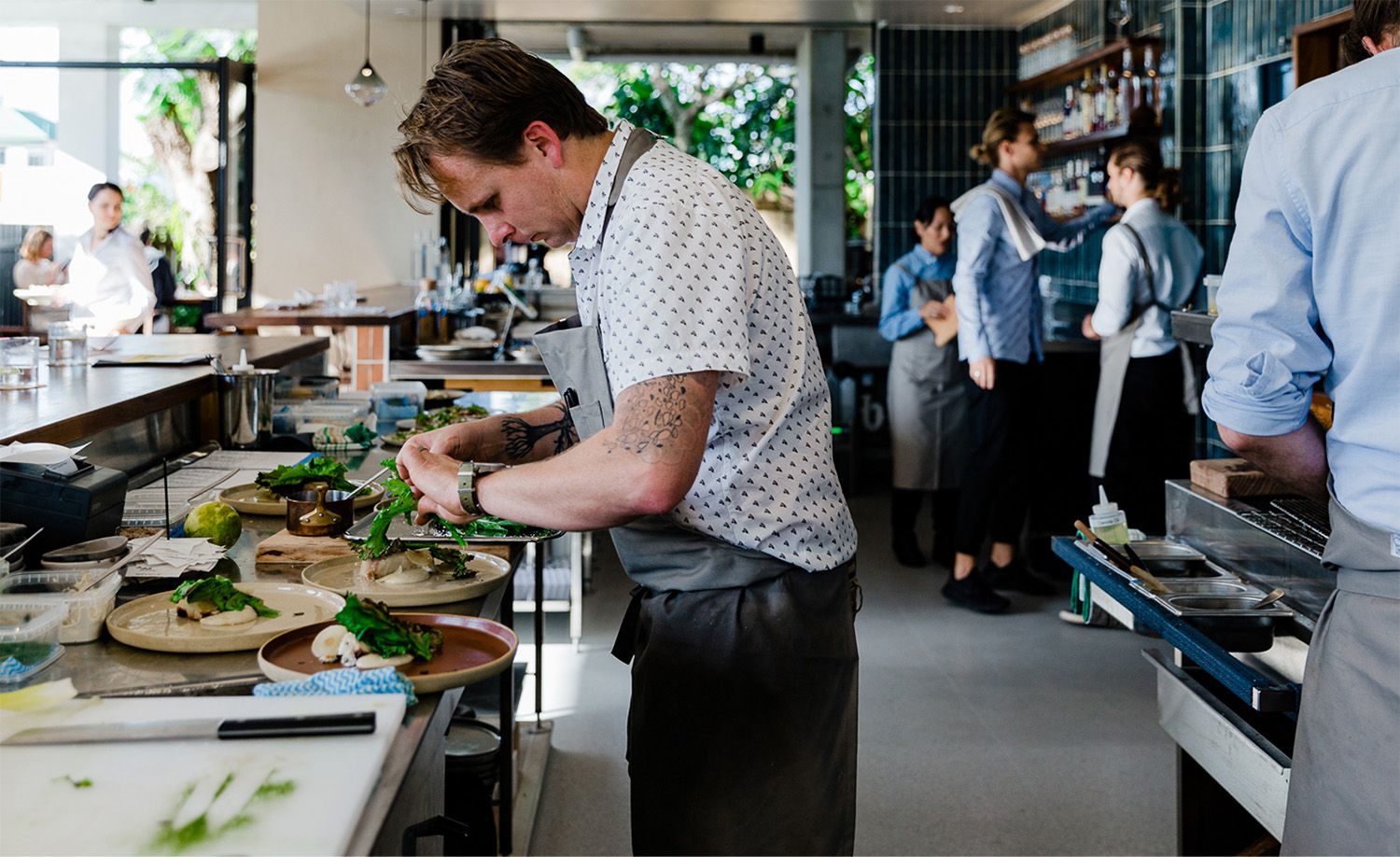
(bd) “Sense of place” plays a huge role to our food, suppliers, team culture and sustainability policy too. Our place, landscape, seasons and climate shapes our menu and restaurant.
The most obvious way in food is that we buy all fresh fruit, vegetable, poultry and seafood in a 30min to 1 hour driving radius from us. Local volcanic soils and subtropical climate means we have an amazing diversity that is unique to this region
One of the best reviews we had was from the New York Times (2021), who really understood sense of place in food too; “The food at Pipit actually tastes like the landscape around it — that is to say: beautiful, subtropical, with a saline hint of the ocean and dunes. If this is indeed what the next wave of Australian cooking looks like, then we are very lucky to be able to call it our own.” https://taustralia.com.au/pipit-the-restaurant-with-a-sense-of-place
There are other restaurants in Gold Coast, Brisbane, and Sydney who use Northern Rivers farmers and suppliers too, so we believe that true “placeness” extends beyond just local produce. At Pipit, we strive to create an experience that feels uniquely tied to the Northern Rivers.
From our sourcing choices to our food, drinks, service style, everything is designed to make you feel like you are truly immersed in this region. Some local venues can feel like you are escaping elsewhere — like to the Hamptons, Melbourne, Tokyo etc, but if you are sitting in Pipit, we also want you to feel like you are really sitting in the Northern Rivers and nowhere else. If we’ve succeeded, Pipit’s identity is so inherently Northern Rivers that it could not be relocated elsewhere.
(mg) What makes the Northern Rivers different from other places you’ve lived or worked?
(bd) One of the most beautiful aspects to our Northern Rivers area is the ability to produce foods that are common to other regions of the world. We have great produce connection to South-East Asia and South America as from certain climate, rainfall and growing conditions — we share more in common with them than with a European heritage. As a result, what we can call “local” are many foods that other parts of Australia can only dream of! This opens us up to a level of authenticity in the food we are able to produce, even when the ideas may be rooted in cultures that are comparatively new to this land.
(mg) What does your perfect day in the Northern Rivers look like?
(bd) If I’m lucky, our family can start our day at one of our farmers markets. New Brighton markets is a favourite for my daughter so we can get breakfast from Nomadic Kitchen and chocolate-dipped strawberries. Follow that up with a surf or snorkel at Hastings Point. Lunch might be a sandwich from Bread Winner in Kingscliff, then a bike ride on the beach path from Kingscliff to Cabarita, an afternoon drink at the Surf Club in Cabarita, and some dinner from Roco Ramen in Brunswick Heads.
(mg) Who are the other makers, creators, or people in the region that inspire you?
(bd) There are so many diverse suppliers, brewers, farmers, distillers and agri-tourism businesses in our area. This reflects a sense of entrepreneurial and creative spirit you don’t find everywhere — that the community supports creativity, and people “giving it a go”.
One of our creative collaborators has been Leia, from Grit Ceramics, who makes our plates and has been so open in the design process in making custom shapes for us as well as how we innovate process. In collaboration, we’ve also used Pipit’s kitchen “waste” in the ceramics process — such as our wood grill ash in glazes, fish bones in bone china and shells in ceramics.
Michael and James from Australian Bay Lobster Producers are also one of our many inspiring suppliers we use. They are innovating world-first aquaculture, as the only place farming Bay Lobsters and creating soft-shell lobsters. It’s decades of research development, and they even build an underground pipe to the ocean. That’s no small feat, and the sheer foresight and tenacity to do that is amazing.
australianbaylobster.com.au
See a detailed list at:
pipitrestaurant.com/visitors-guide
(mg) What are you working on right now that excites you?
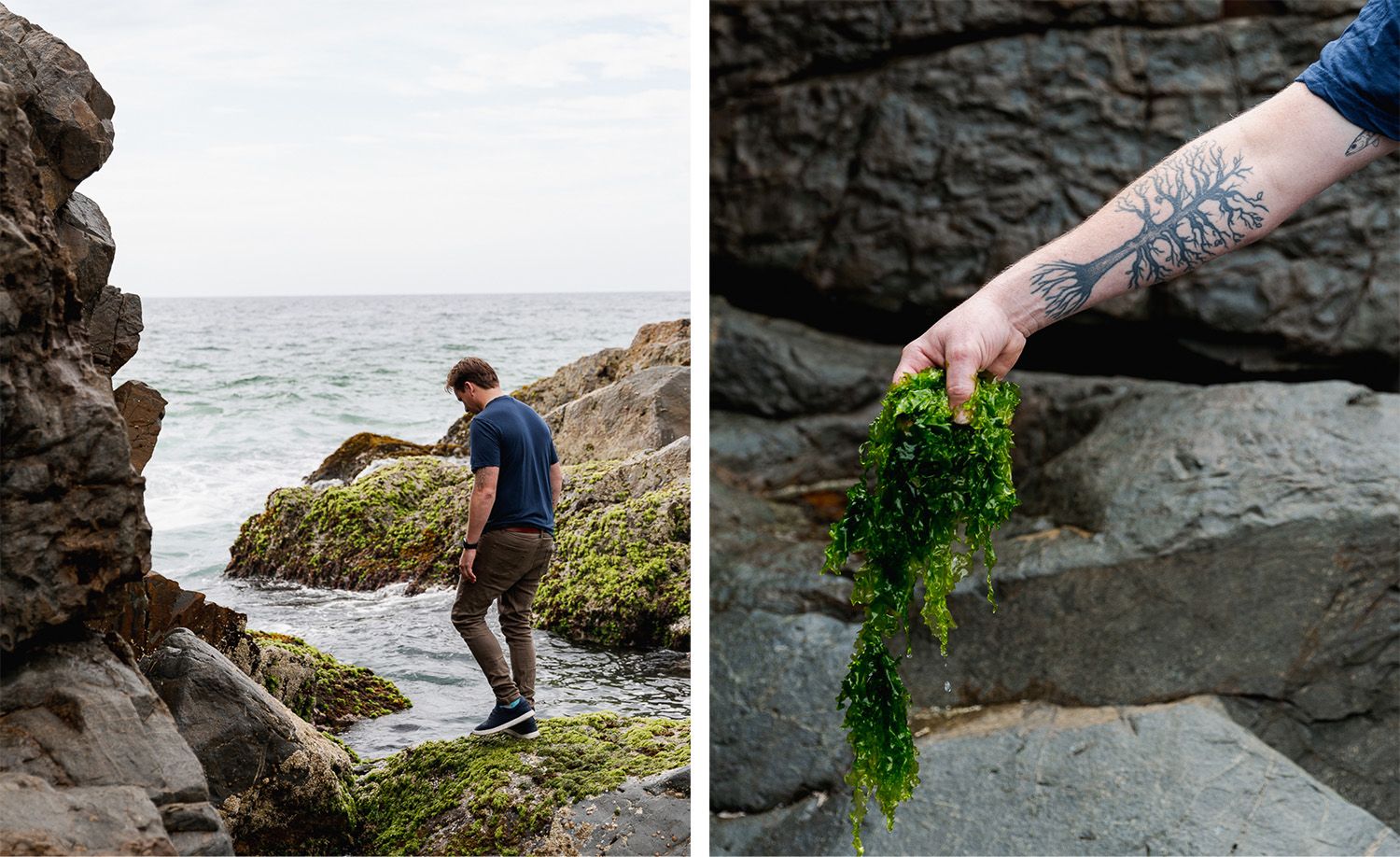
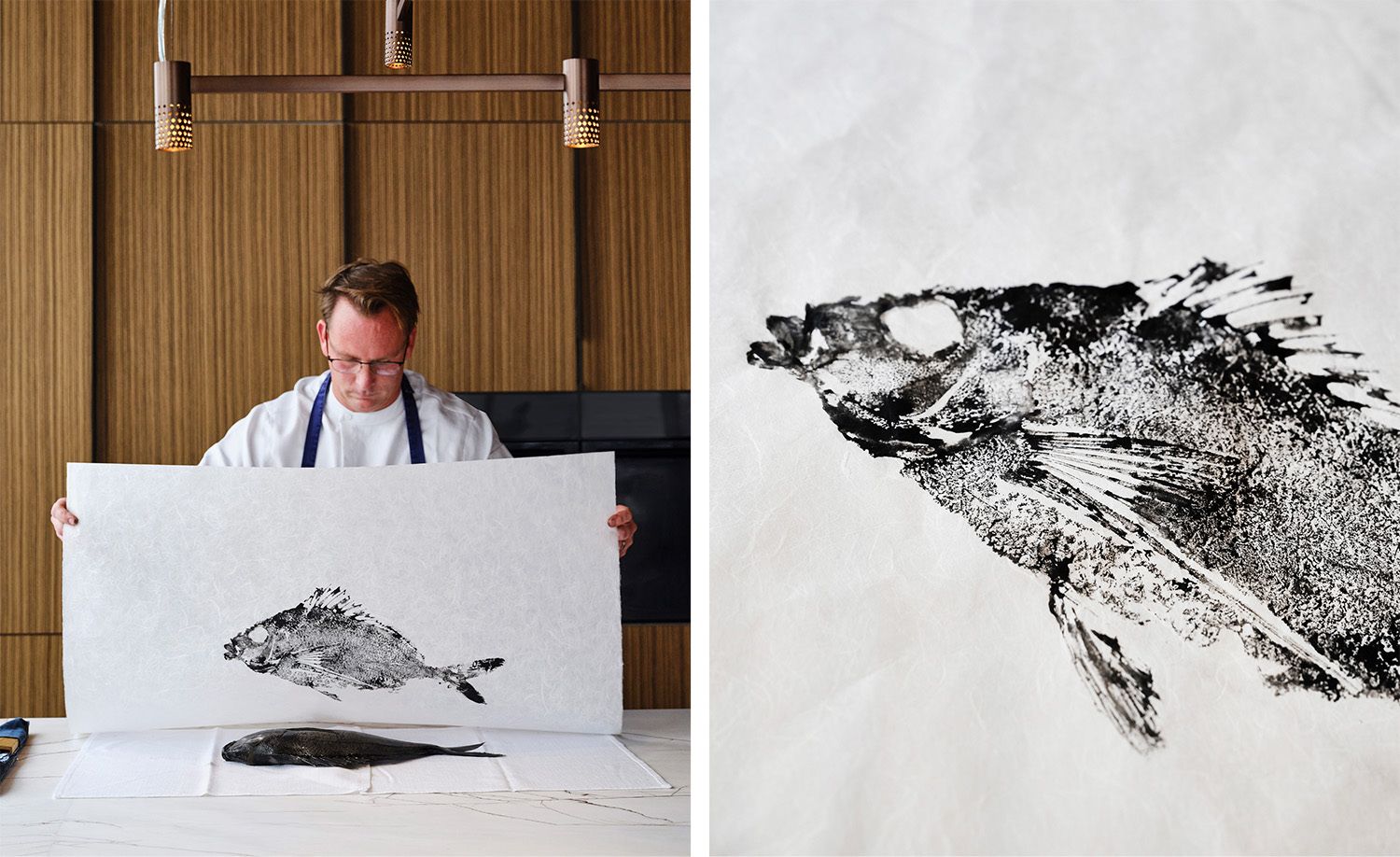
(bd) Since 2020, I’ve been making Gyotaku art prints with the ingredients we use in Pipit’s seasonal menus.
Gyotaku is a Japanese method that involves ink directly on to fresh whole seafood and then pressed into rice paper.
It really excites me to be working on upcoming art commissions, art events, and trying to expand art and dining packages to more private groups and tourism trade. We are the only restaurant in Australia uniquely offering gyotaku art and we hope to bring more people to our region for unique and local experiences.
At Pipit, we strive to create an experience that feels uniquely tied to the Northern Rivers. From our sourcing choices to our food, drinks, service style, everything is designed to make you feel like you are truly immersed in this region.
(mg) What is the most memorable trip you’ve taken?
(bd) I’ve been lucky to travel to many places in my 20s, and for my work as a chef. A standout trip was to New Zealand for our honeymoon, where we travelled from the south to north. The mountains and landscape were so striking, and we also experienced great memorable dining like at Amisfield Winery too. We got given an ultra luxury hotel stay in Queenstown as a wedding gift — which we could honestly never afford ourselves, so that felt very special even if just 1 night.
(mg) Where is your next travel destination?
(bd) It’s hard to travel with a young kid and small business, but hoping to get back to Japan for the food, snow, and Disneyland for the kid!
(mg) How has travel changed the way you see the world?
(bd) Travel has definitely made me feel more connected, especially when you find places that you feel a deep home-like resonance with, in an area that is so far removed from what you grew up with — like meeting surfers in Denmark or New York, or finding wild food ingredients that have a genetic similarity in Malaysia.
(mg) If you could recommend anywhere in the world for a mosey, where would it be?
(bd) Kuala Lumpur had so much more than I expected. Darren Teoh from Dewakan helped us to explore the city and its food scene, and it was such a hugely diverse and unique place.
Travel has definitely made me feel more connected, especially when you find places that you feel a deep home-like resonance with, in an area that is so far removed from what you grew up with...
Local knowledge
Favourite local ingredient or product:
We are so blessed with subtropical produce with lots of Australian natives, and South American and South-East Asian fruits and vegetables that thrive here — Strawberry Gum, Finger Lime, Macadamia Nuts, Native Tamarind, Bunya Nuts, Yuzu citrus — are some of the fave local ingredients we love sharing with our guests.
Best swim spot:
Hastings Point
What to do beyond the beach:
We have great bike-riding paths between Kingscliff and Cabarita, and the Northern Rivers Rail Trail (Murwillumbah to Crabbes Creek) has been a big drawcard for visitors.
Best coffee in the region:
Pipit serves Zentveld’s Coffee as a great local coffee farm and roaster. They are also open for farm tours.
Go-to spot to reset or find inspiration:
The ocean. Hastings Point is a great place with both surf, creek and headland — so no matter the conditions or weather, it gives you an option to enjoy. The surf at Wategos in Byron Bay (when I can get it on a quiet day) is always a special spot connected to my family and childhood.
Favourite time of day in the Northern Rivers:
My schedule doesn’t really often allow for a late afternoon surf these days, but some of my best ocean memories are seeing the colours of gold and purple reflect on the ripples in the water, and the mountains in the distance turn into fading shadows.
Northern Rivers must-eats:
So many! As a family, some of our “go-to’s” include Bush Ice Creamery and Roco Ramen in Brunswick Heads, Bread Social in Tweed, Jordy’s Pizza in Casuarina. We also list some must-eats on our website for foodie visitors:
pipitrestaurant.com/visitors-guide
Northern Rivers’ best kept secret:
Bush Ice-Creamery in Brunswick Heads.
24 hours in the Northern Rivers:
Arriving from the Gold Coast airport, swing by Bread Social at Tweed Heads for the best pastries. Book a hotel around Casuarina or Halcyon House in Cabarita and enjoy 9km of beachside off-road bike track between Kingscliff and Cabarita. Enjoy the beach anywhere in that stretch or surf the break at Cabarita. Headland Drive 10mins to Pipit, Pottsville for dinner. Make a pre-dinner pitstop at Hastings Point for the headland views and creek. Sleep in or have a beach stroll the next morning. 15min back to the Gold Coast Airport, you still have time to get to the Tropical Fruit World shop and cafe to see and taste amazing fruits uniquely of this region before going home.